
At Lotus, we’re fortunate to have a diverse team, including colleagues in India and Canada, who bring rich cultural traditions and stories into the workplace. One that recently came up in conversation (with no shortage of fond memories and laughs) is Raksha Bandhan, a cherished Indian festival that celebrates the unique bond between brothers and sisters.
So what is Raksha Bandhan, and why does it sometimes involve a sibling “tax”?
A Sacred Thread—and a Timeless Bond
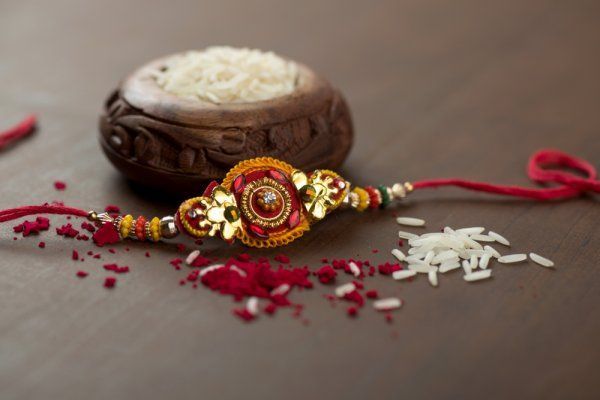
Raksha Bandhan, often shortened to Rakhi, is a Hindu festival rooted in a beautiful idea: a sister tying a sacred thread (the rakhi) around her brother’s wrist as a symbol of protection, love, and mutual respect. In return, the brother promises to look out for his sister—traditionally with a gift, though sometimes with a bit of friendly extortion (more on that in a moment!).
While rooted in Hindu tradition, Raksha Bandhan is celebrated across India and by Indian communities around the world, with traditions varying between families and communities. Today, it’s not just about biological siblings; rakhi can be tied between cousins, close friends, or anyone who shares a sibling-like bond. The thread itself, once simple cotton, now comes in all shapes and colours—decorative, beaded, even cartoon-themed for kids.
When Is Raksha Bandhan Celebrated?
The festival falls on the full moon of the Hindu month of Shravan, which usually lands in August on the Gregorian calendar. In 2026, Raksha Bandhan will be celebrated on Friday, August 28th.
It’s a public holiday in several Indian states and a day filled with sweets, laughter, family reunions—and sometimes, a bit of negotiation over gift expectations.
What to Gift Bhabhi on Raksha Bandhan?
Raksha Bandhan is not only a celebration of the relationship between brothers and sisters. It’s also a festival to celebrate the relationships that become part of the family after marriage. A Sister-in-law or Bhabhi is also an important part of these festivities for bringing happiness and warmth to family.
Many families celebrate Bhabhi Rakhi on the same day as Raksha Bandhan. A Bhabhi Rakhi – known as Lumba Rakhi is a special and decorative thread tied to Sister-in-law’s bangle on this day by a Sister of her husband. It is tied for welcoming Sister-in-law into the family and for honoring her special role in the family.
This tradition originally celebrated and coming from Marwari and Rajasthani Communities, where they say “Lumba” as a bangle. Unlike the traditional rakhi tied around a brother’s wrist, a Lumba Rakhi is traditionally attached to a Bhabhi’s bangle.
Bhabhi Rakhi tied by sister symbolizes sister’s acceptance and love for her brother’s wife as an equal part of the family.

What Does a Bhabhi Rakhi Look Like?
A Bhabhi Rakhi often has a more decorative design, with dangling elements, tassels, beads, or pendant-like details that complement the bangle.
The Thread structure is not usually same as Brother’s “Rakhi”. It features a dangling or hanging structure, often resembles miniature bridal kalire with a characteristic tassel or pendant, and tends to be more decorative to suit the bhabhi
( Sister-in-law ).
“Wait, I Have to Pay My Sister?”
During a recent team call, a few of our Indian colleagues joked that Raksha Bandhan feels like a “yearly tax” for being a brother. In many families, after the rakhi is tied and the traditional blessings are exchanged, the brother gives a gift to the sister—this can range from sweets and jewelry to money or gift cards.
One team member quipped, “It starts with a sacred ritual, and ends with me handing over 500 rupees.” Another chimed in, “It’s the only day I’m forced to admit my sister is right about everything—and then I pay her for it.”
These tongue-in-cheek memories highlight the playful spirit of the festival, which balances reverence with fun.
A Festival That Grows With You
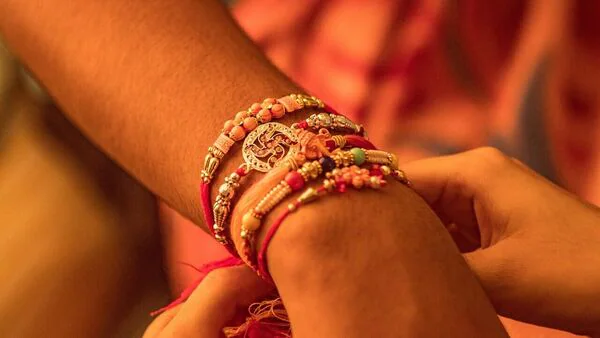
For many, Raksha Bandhan begins as a childhood ritual—often performed reluctantly by squabbling siblings—and grows into something more meaningful with age. As one of our team members put it, “When I was younger, I saw it as just another festival. But now, living far from my sister, it’s a reminder to call, to reconnect, to be present.”
This evolving significance is what makes Raksha Bandhan so special. It isn’t just about the rituals—it’s about the intention. Whether you’re tying a thread in person or mailing a rakhi across continents, it’s a moment to honour family and friendship.
Festival Traditions
People celebrate Raksha Bandhan in many ways. The day usually begins with family gathering. Sisters may perform aarti, apply a tilak to their brother’s forehead, and tie the rakhi around his wrist. Brother gives gifts to his sister in return by teasing her or pranking her by showing bit funny side of him and entertain her with love.
Families often celebrate by sharing a meal together. which includes many dishes, some celebrates by going out in restaurants and some celebrates by having homemade delicious sweets such as laddus and barfi.
Celebrating Raksha Bandhan in Schools and Early Childhood Programs

Schools and early childhood programs may organize Raksha Bandhan-themed activities for children.Some schools organize supervised rakhi-tying activities as a way to introduce children to the festival and its cultural traditions. It’s an opportunity to teach students about love, respect, and cultural diversity. Teachers and principals of schools organize some fun activities and cultural activities on this day performed by many little students and then meals together with students, teachers and their parents. This is such a beautiful way to show unity and love.
Celebrating Raksha Bandhan Abroad
Many members of the Indian diaspora, including some here at Lotus, continue to celebrate Raksha Bandhan even while living and working far from home. Some send rakhis by mail, others use video calls to keep the tradition alive. And yes, the sibling “payment” still happens—sometimes via e-transfer instead of cash!
“My sister mailed me a rakhi in July just to be safe,” one colleague shared. “I already know what’s coming: she’ll text me on the day with a selfie of her wearing it and an e-transfer request.”
More Than Just a Thread
In a world that often moves too fast, Raksha Bandhan is a chance to pause, reflect, and express appreciation for the people who’ve stood by us since the beginning—whether they’re blood relatives or chosen family.
