
In freight and logistics, it’s important to understand the difference between FTL and LTL shipping. With supply chain pressure continuing into 2026, Canadian shippers are looking for practical, prudent ways to move freight while still meeting delivery expectations.
What’s the best choice in Canada? It depends on your budget, timeline, shipment size, and where you’re shipping. This guide to LTL vs FTL shipping in Canada will give you guidance on differences, benefits, challenges and how you can choose the perfect way for your logistics.
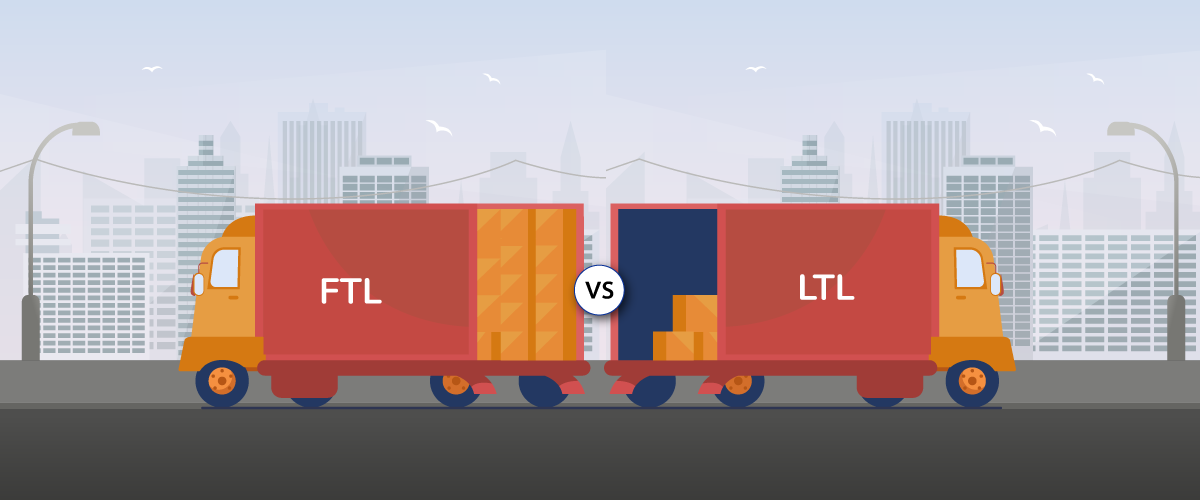
What is LTL Shipping?
Less-than-truckload (LTL) is used when your shipment doesn’t need a full trailer. It is used when your shipments do not need the entire trailer. In this, your freight shares the space with the freight of other businesses in the truck, which can lower costs and improve trailer utilization.
In Canada, LTL shipping is the most popular method among small-sized, medium-sized businesses and companies shipping smaller shipments on a frequent basis.
LTL carriers in Canada usually operate on regional or national routes, typically run hub-and-spoke networks with multiple pickups and terminal transfers before final delivery. This makes efficiency in costs per shipment, but it may cause slower transit times due to multiple stops and terminal handling.
Features of LTL:
- Cost-effective: Pay only for the space your freight occupies.
- More Handling: Freight may be loaded and unloaded multiple times through terminals
- Ideal for smaller shipments: Best when you’re shipping a few pallets and do not need a full trailer.
How pricing works in LTL:
LTL pricing is usually based on:
- Weight and Dimensions
- Distance
- Additional Services as any special requirements like liftgate delivery, residential service, or white-glove service
- The freight class
Full truckload (FTL) uses a dedicated truck and trailer for your shipment. This method is usually used for larger shipments, time-sensitive freight, or loads that benefit from minimal handling.
With FTL shipping in Canada, the truck typically moves directly from origin to destination with no multiple stops or multiple shipments, which provides faster transit times and good cargo security.
What is FTL Shipping?
Features of FTL:
- Fast Transit Times: shipments travel directly from origin to destination, saving transportation times.
- Higher Cost: You are paying for a dedicated truck, so the per-shipment cost is often higher than LTL.
- Best for larger shipments: Common when you’re shipping enough volume to fill most of a trailer, or when you want direct service.
How pricing works in FTL:
Aspects that affect the costs in FTL,
- Distance
- Truck Availability
- Fuel Costs
- Special equipment requirements


Why is FTL vs LTL shipping in Canada a major concern in 2026?
The current shipping trends across Canada in 2026 reflect steady domestic demand, active Canada–U.S. cross-border trade, and rising expectations for visibility and speed. Choosing the right method is the crucial point for Canadian logistics companies.
There are some factors that affect on making decision and make the situation more critical to make a decision:
- Fuel Costs: This impacts the economics of both methods in a different way.
- Carbon Tax Regulations: This also affects both methods based on their freight.
- Carrier availability: Driver shortages and regional capacity imbalances can impact rates and lead times.
- Supply chain digitization: Better tracking, routing tools, and load consolidation make it easier to optimize both LTL and FTL.
Your ability to choose between LTL vs FTL shipping in Canada can show your service Quality and competitive edge, whether you’re shipping within Canada or cross-border.
FTL vs LTL cost comparison Canada
This is a crucial question among the businesses – which method is cheaper – FTL or LTL?
It usually comes down to shipment size and frequency.
- LTL shipping is less costly for smaller shipments as you’re paying for only the space for your shipment.
- On the other hand, FTL is cost-effective for higher-volume shipments as it acquires the entire truck and you’re paying for the entire truck, but it maximizes the capacity.
- While using LTL, there are some hidden costs, such as reclassification, accessorial fees, and delays from multiple stops may affect the whole pricing. While FTL can be more cost-effective on long hauls once your volume is high enough.
LTL vs FTL Shipping in Canada: Explained Comparison
| Feature | LTL | FTL |
|---|---|---|
| Speed and Delivery Time | Long transit times due to multiple stops and terminals | Faster transit times with single route and no multiple stops |
| Handling | More handling needed as multiple stops may create risk of damage to goods. | Less handling needed which reduces damage of fragile or large-volume goods. |
| Freight Size and Weight | Ideal for weights between 150 to 15,000 pounds | Ideal for higher-volume shipments over 15,000 pounds |
| Cost Effectiveness | Lower costs as multiple businesses share same truck space | Higher costs but productive for higher volume shipments |
| Risk and Security | Increased handling may create higher risk of damage | Lower risk due to fewer handling points |
| Flexibility | More frequent schedules but depends on available space | Dedicated capacity and more control over timing |
| Additional Requirements | Offers liftgate, residential pickup, temperature control | Can accommodate specialized needs but fewer service options |
Final Conclusion
As Canadian logistics continues to evolve in 2026, understanding the difference between FTL and LTL is more than a nice-to-have, it directly impacts cost, transit time, and risk. It does not matter if you are a small business or a national distributor moving truckloads every day.
The flexibility provided by today’s Canadian logistics environment is the most useful part for businesses. With advanced technology uses, more strong route optimizations, seamless integrations of carriers and systems. Many companies do not rely on just one method. They blend FTL and LTL depending on shipment size, urgency, and lane.
A Hybrid Strategy: The Best of Both Worlds
Major Canadian shippers use a hybrid strategy. Using both LTL & FTL shipping, depending on the shipment profile. This is more like a freedom for the logistics manager to optimize the costs, switch between two modes based on the availability of carriers and routes, leading to consistent service and fulfillment of consumers across Canada.
Get Started
Get Started with Lotus Terminals Ltd.
Talk to our team. Let’s get your cargo moving.
Plan your shipment with Lotus Terminals. If you’re looking to optimize your shipping with reliable, efficient and cost-effective solutions. email bringit@lotusterminals.com to discuss your shipment and request a quote.
Frequently Asked Questions:
With LTL, your freight shares trailer space with other shipments and may move through terminals. With FTL, your freight uses a dedicated truck and typically moves direct.
Choose FTL when you have larger volume, need faster transit, want fewer touchpoints, or want dedicated capacity for higher-value or fragile freight.
Yes. LTL shipping is generally cheaper for smaller shipments because costs are shared across multiple businesses. However, FTL can be more economical for large or long-distance freight.
FTL is faster than LTL as the truck or trailer does not include multiple stops and the whole truck is dedicated to one larger volume shipment.
Yes, FTL is safer than LTL for freight transportation because the LTL method includes multiple stops and shipments, which requires more handling resources, which can create a risk of damage to goods. While in FTL, The truck is dedicated to one large shipment and follows a route decided from origin to destination with no more stops and less handling needed increases the security of goods.
